18 December: International Arabic Language Day
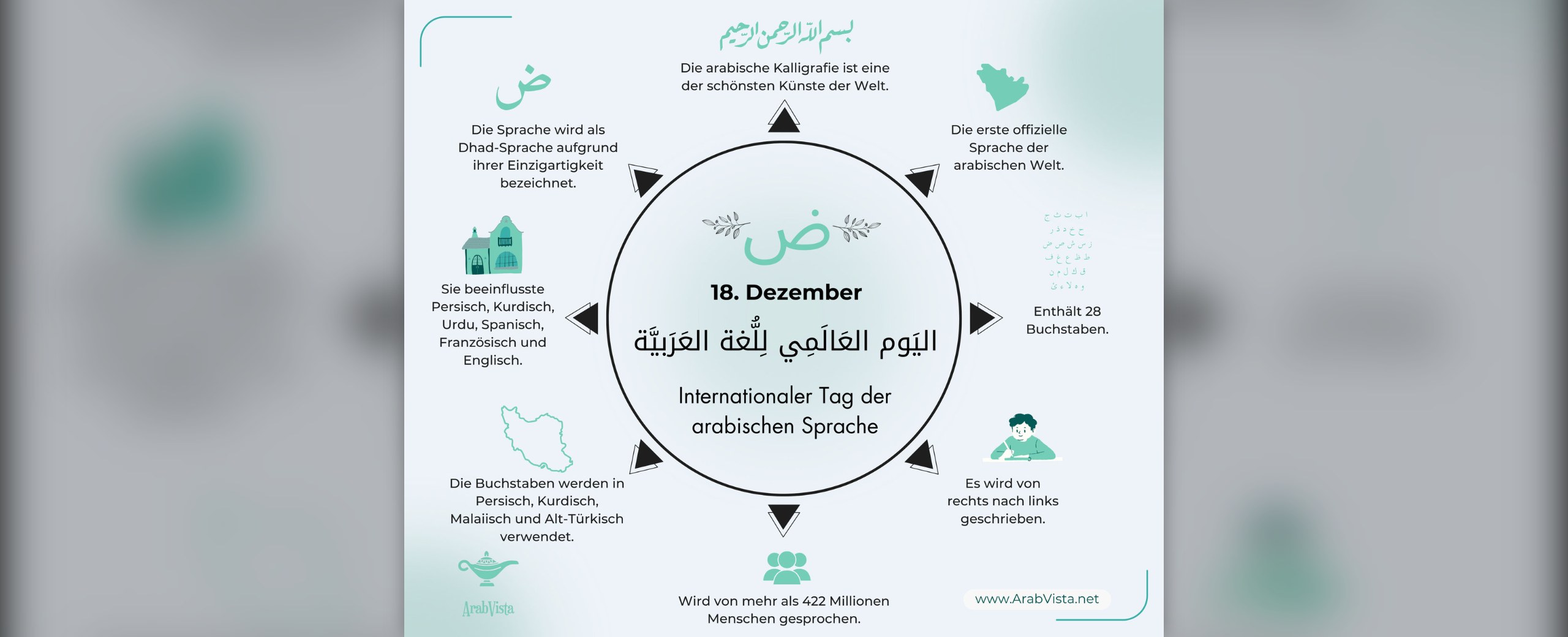
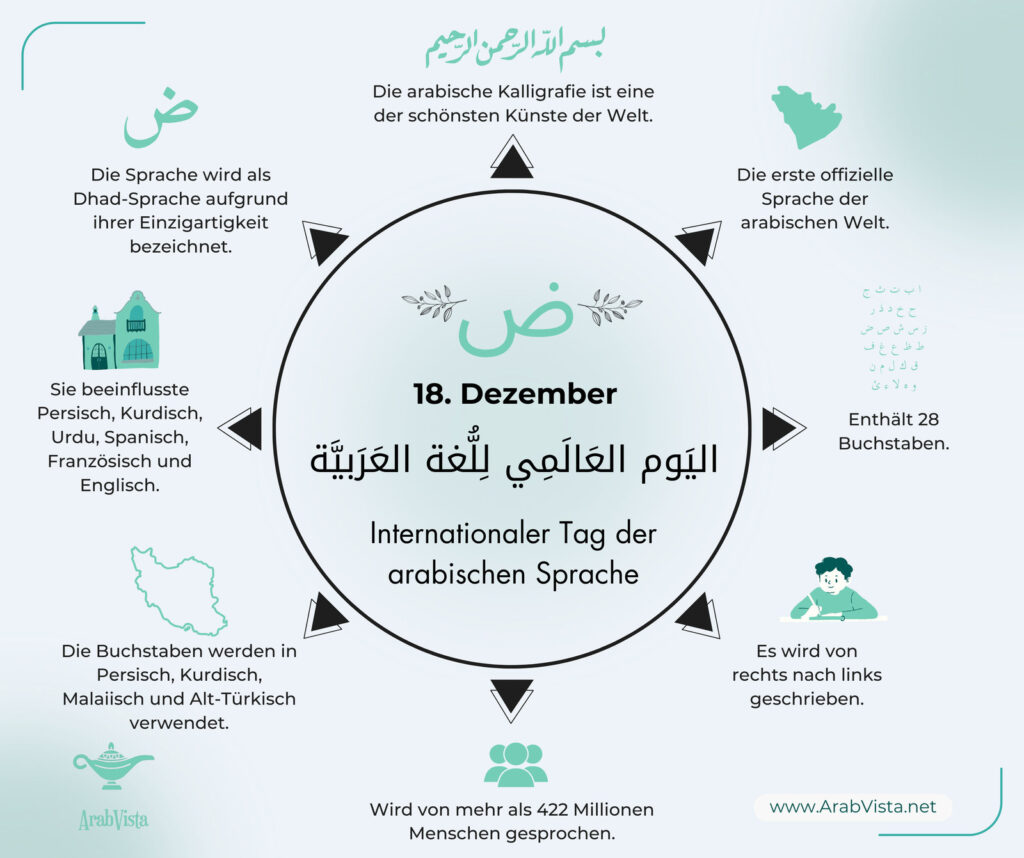
Every year on 18 December the world celebrates International Arabic Language Day. The date commemorates 18 December 1973, the day the United Nations made Arabic its sixth official language.
In 2012 UNESCO decided to mark the day officially every year. Since then, universities, language schools, cultural centres and international organisations have invited people to talks, readings and cultural programmes around 18 December.
Why this day exists
Arabic has made an enormous contribution to science and culture. In the Middle Ages it was the language of philosophy, medicine, mathematics, astronomy and geography. Many works of antiquity were translated into Arabic, developed further and reached Europe via Arab scholars – an important building block for the European Renaissance.
The day therefore has several aims:
- to strengthen appreciation of Modern Standard Arabic (al-Fuṣḥā),
- to promote its use in education, science and the media,
- to encourage institutions to support Arabic teaching,
- and to make the cultural richness of the language visible.
A brief look at history
Early forms of Arabic can be traced back to the first millennium BC. Originally, Arabic was spoken mainly in the north of the Arabian Peninsula and in the southern Levant.
Classical Arabic developed on the basis of the Quran and ancient Arabic poetry. To this day it is the grammatically standardised form of the language and the common foundation of the Arab world. With the spread of Islam, Arabic spread far beyond the peninsula – first as the language of religion, soon also in administration, science and everyday life.
One language, many dialects
Because the Arab world is so vast, numerous dialects have developed, including:
- Levantine (e.g. Syria, Lebanon, Jordan, Palestine)
- Egyptian
- Gulf Arabic
- Iraqi
- Maghrebi (Morocco, Algeria, Tunisia, Libya)
This has led to a clear division of roles: Modern Standard Arabic for writing, education, the media and official occasions – dialects for everyday conversation. By the way, this isn’t unusual: many languages in the world know this coexistence. That’s why we recommend learners start with Modern Standard Arabic. We explain why in our article Modern Standard Arabic or dialect?
Why Arabic is so much in demand today
Many Arab countries, especially in the Gulf, are experiencing a strong economic and technological boom. International companies are investing in the region, and the Maghreb is gaining importance as a production location. Arabic skills are in demand in business, diplomacy, development cooperation, education, the media and tourism.
And last but not least, Arab countries are popular travel destinations. If you speak the language, you experience culture, traditions and everyday life quite differently – with real encounters instead of just impressions from the outside.
Celebrate the day with your first lesson
Try out our lessons – free and with no obligation.
Free trial lessonView courses