Experiencing Marrakesh: history, culture and modern life
Morocco is the Arab country closest to Europe: at the Strait of Gibraltar, the two continents are only about 14 kilometres apart. Flights are correspondingly short and often cheap – and despite Morocco’s own dialect, learners get by well with Modern Standard Arabic. On our study trip we explored Marrakesh together. Here are our impressions and tips.
Arriving: medina or new town?
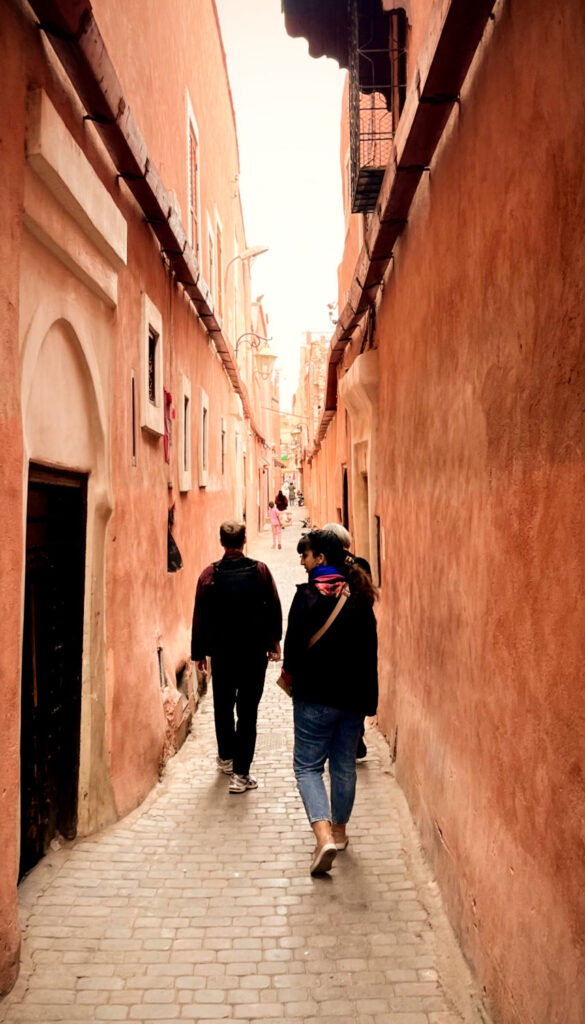
In Marrakesh you have the choice: stay in a riad behind the old walls of the medina – or in the modern new town. The L’Hivernage district offers wide avenues, restaurants and the main railway station. In the evening, a restaurant with live music is well worth it; book in good time, as the best tables go quickly.
For breakfast, besides omelette and fruit, there is often baghrir (small, thick pancakes), harirasoup and of course traditional mint tea.
The Koutoubia Mosque and the old town
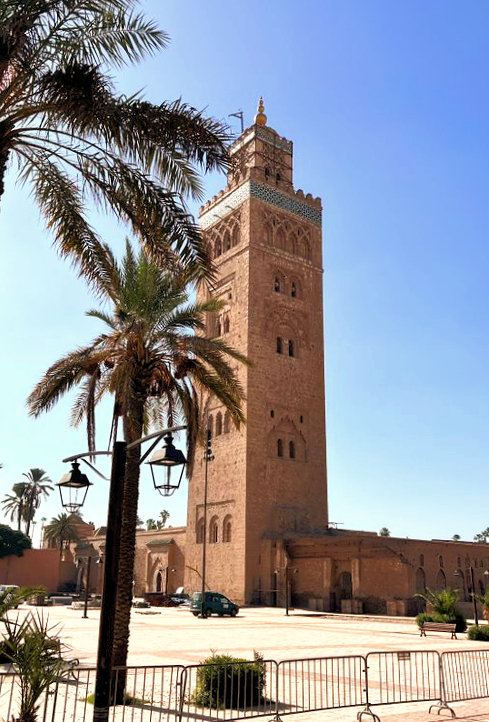
It’s best to start your tour with a walk through Lalla Hasna Park towards the Koutoubia Mosque. Its minaret is the city’s landmark and can be seen from almost everywhere.
Haggle, marvel, enjoy
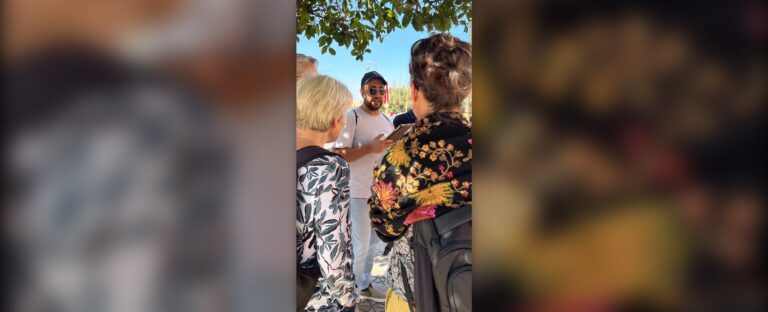
Shopping in Marrakesh is almost a sport – sprints through the narrow alleys of the souks and long-distance runs around Jemaa el-Fna square. Our tip: first drop by the Ensemble Artisanal . The state-supported crafts centre has fixed prices – ideal for getting a feel for what leather goods, carpets or argan oil should cost.
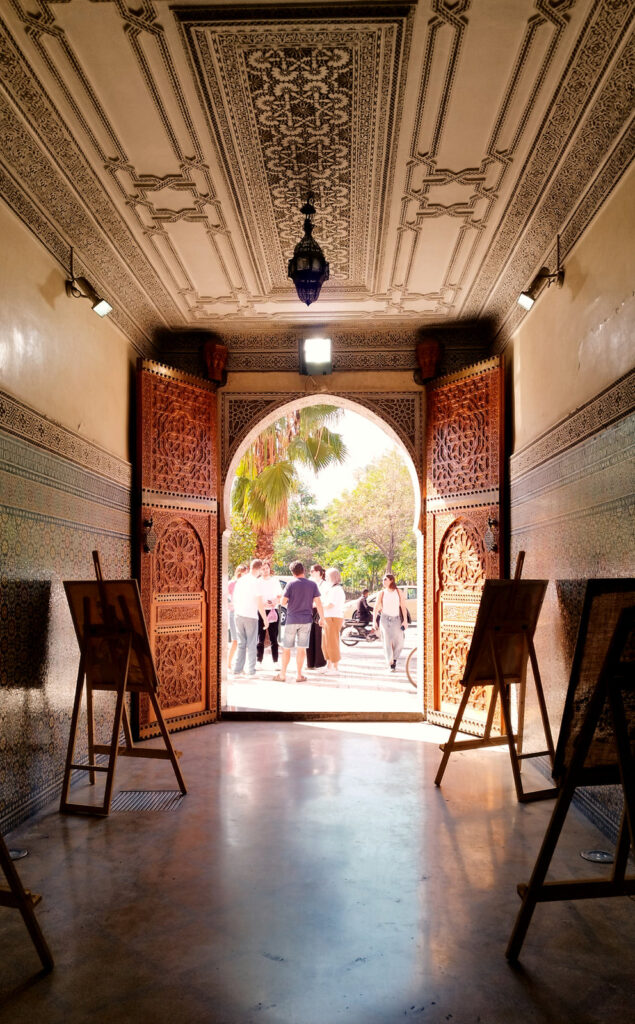
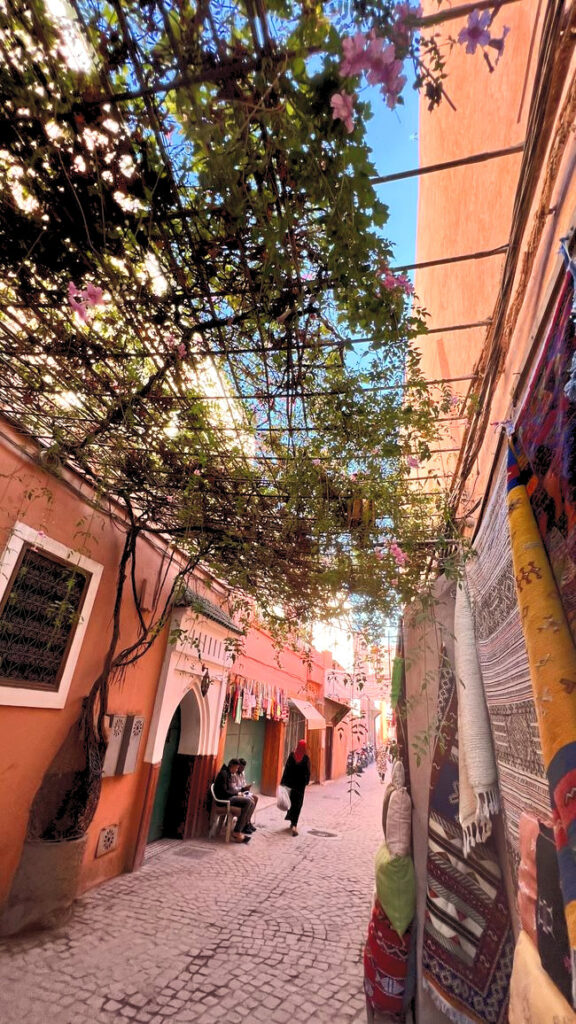
In the souks, practice makes perfect – and patience pays. Whether it’s a carpet or freshly squeezed juice, almost everything is negotiable. All our participants managed to buy something using their Arabic, whatever their level. And don’t worry: the traders in Marrakesh are amazingly flexible with languages.
A thousand years of history
The region around Marrakesh has been inhabited by the Amazigh (Berbers) since the Neolithic. In the 11th century the Almoravids founded the city, which soon became a centre of the western Mediterranean. These are places you shouldn’t miss:
- Bab Agnaou – the magnificent gate to the old royal kasbah
- Saadian Tombs – a highlight of Moroccan art with a noticeable Andalusian influence
- El Badi Palace – less visited, with a fascinating museum on the city’s history
- Bahia Palace – famous for its courtyards and wooden ceilings
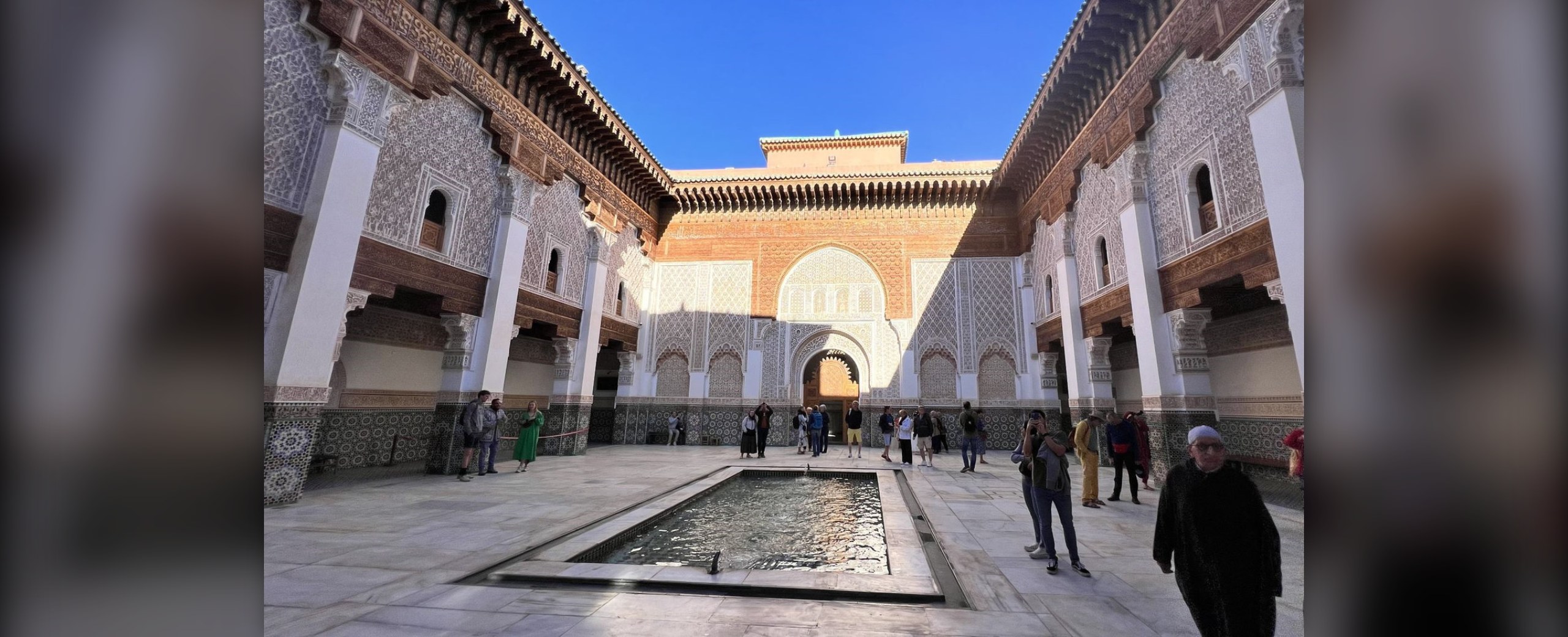
- Ben Youssef Madrasa – once one of the largest Quran schools in North Africa
- Almoravid Koubba – from the 12th century, one of the oldest surviving buildings in the city
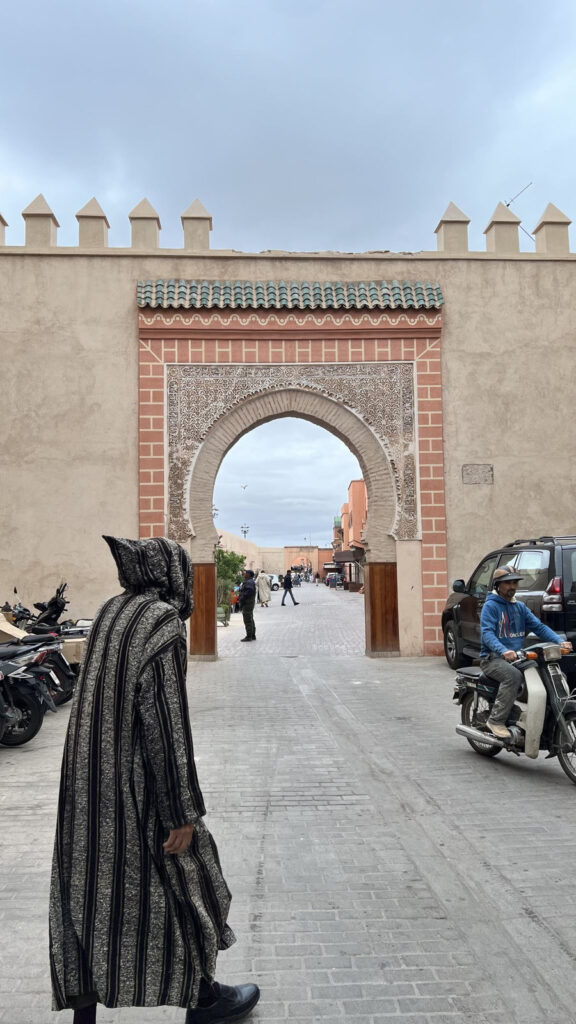
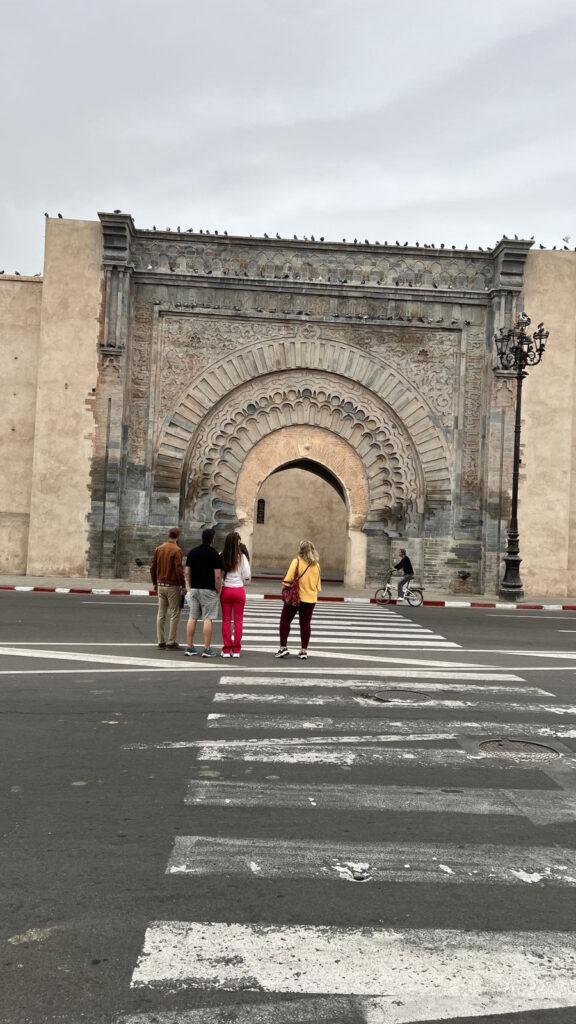
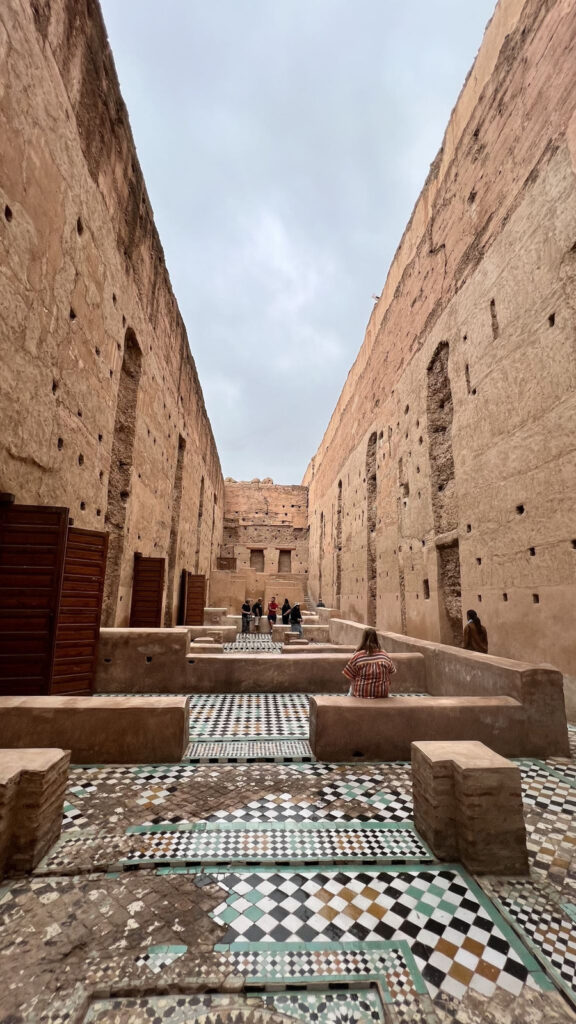
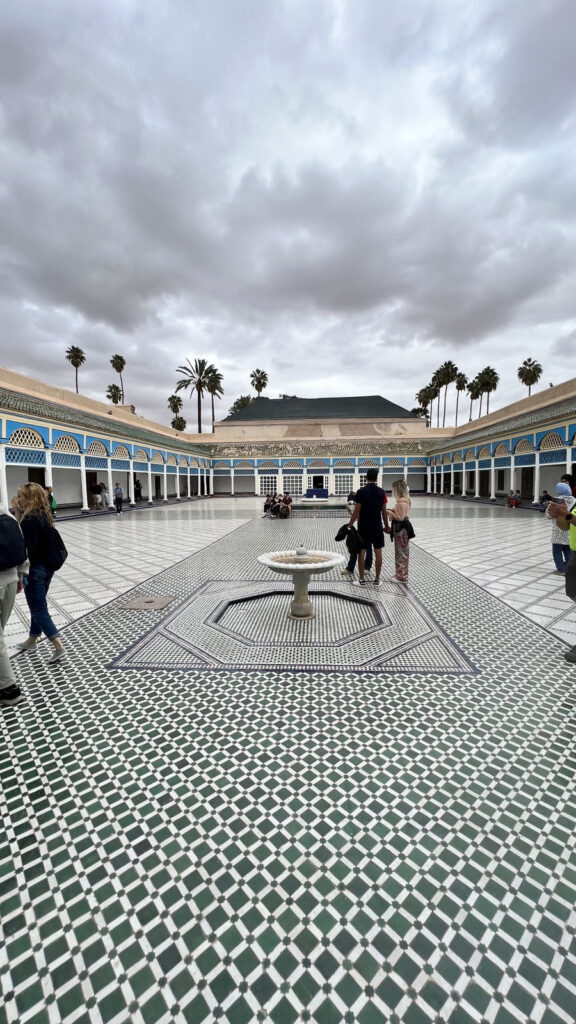
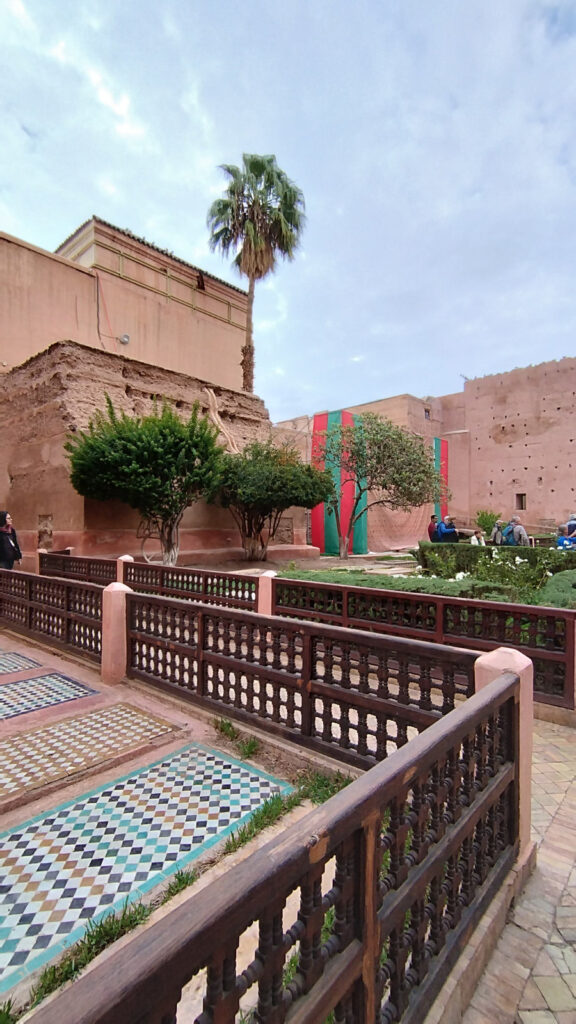
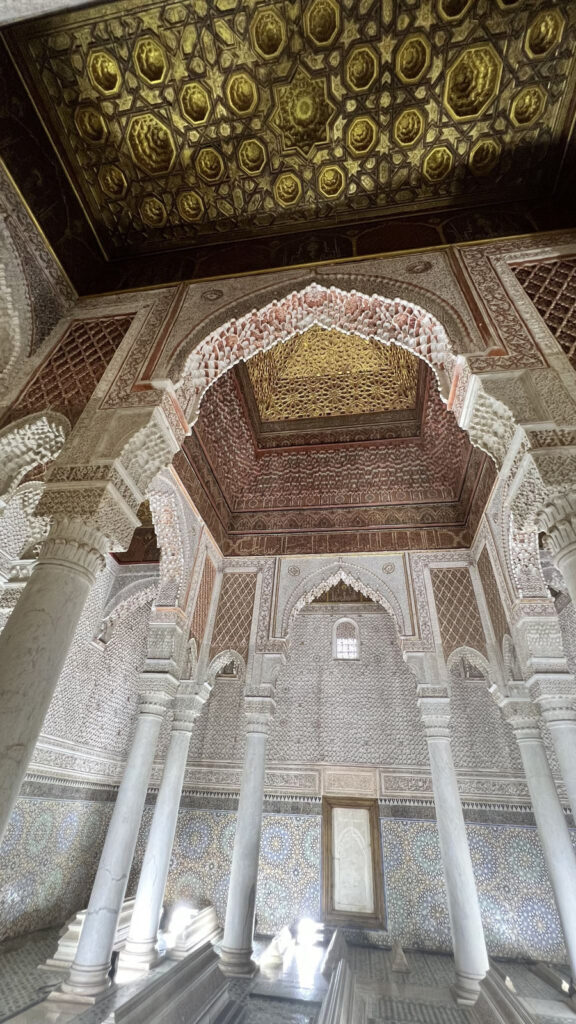
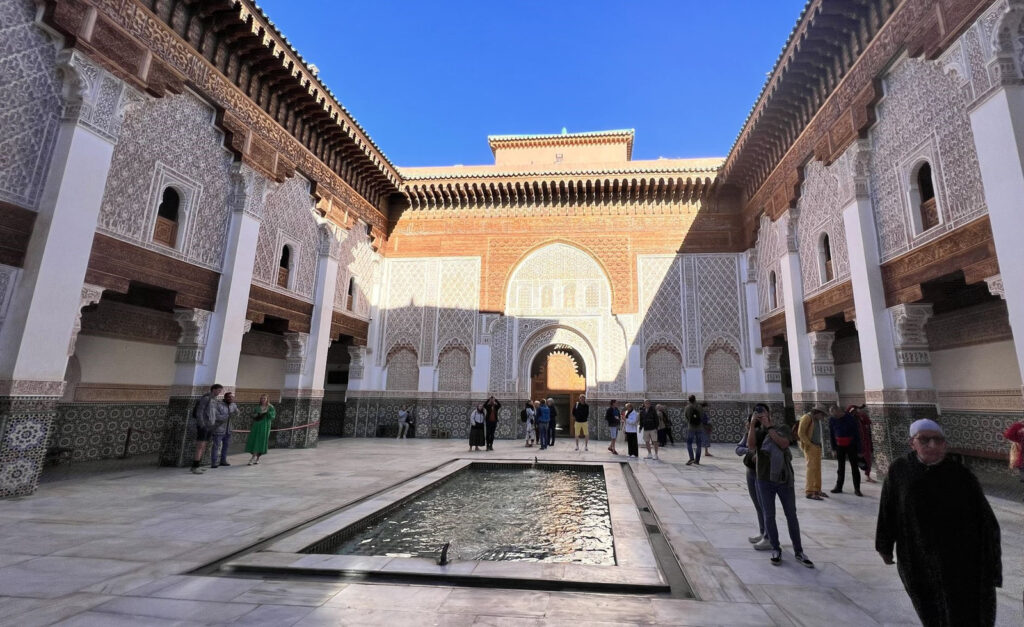
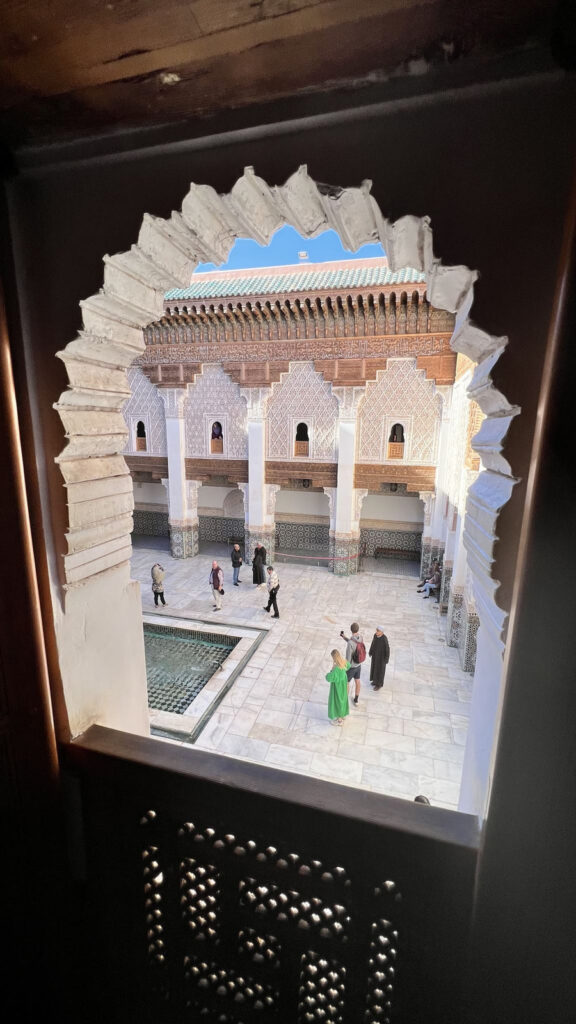
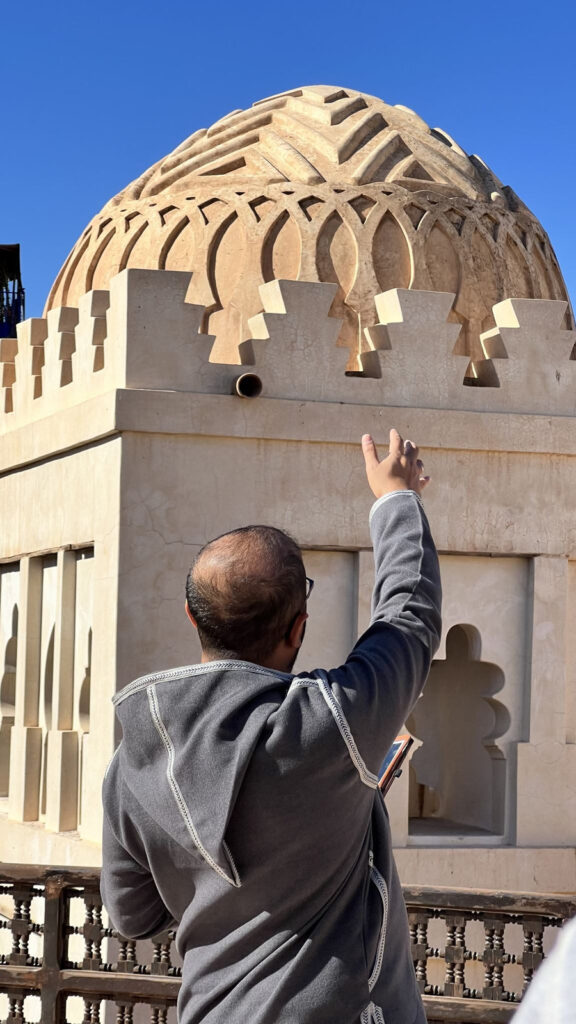
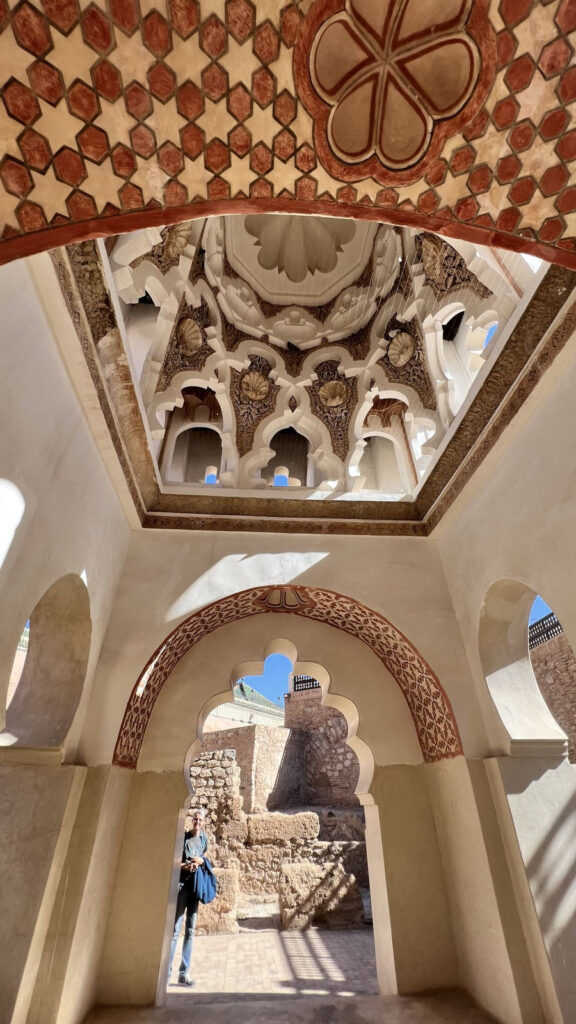
In the Mellah, the old Jewish quarter, synagogues tell of the long coexistence of different religions. And at the Music Museum in the Mouassine district you can enjoy Andalusian music at small concerts.
Modern, creative Marrakesh
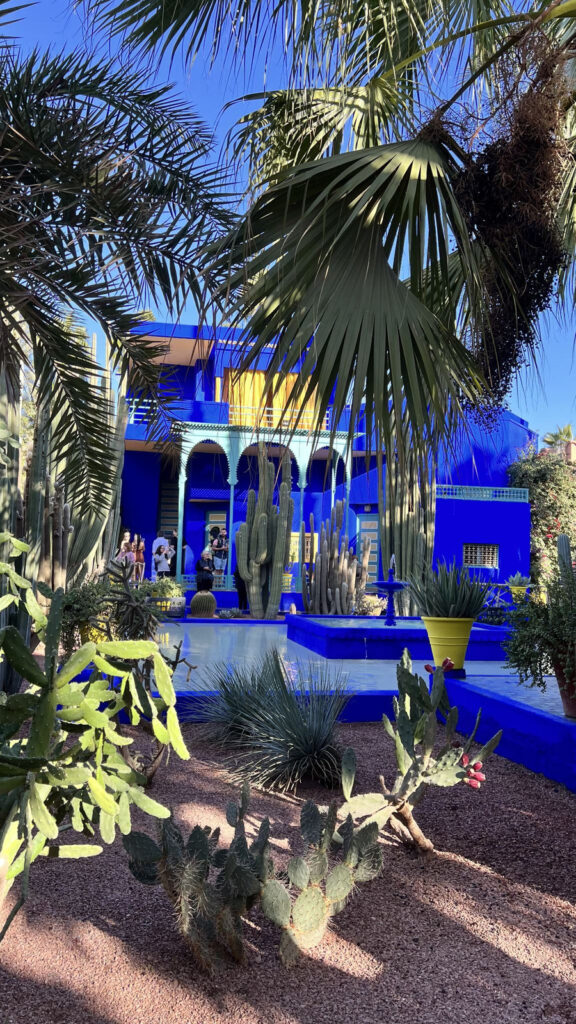
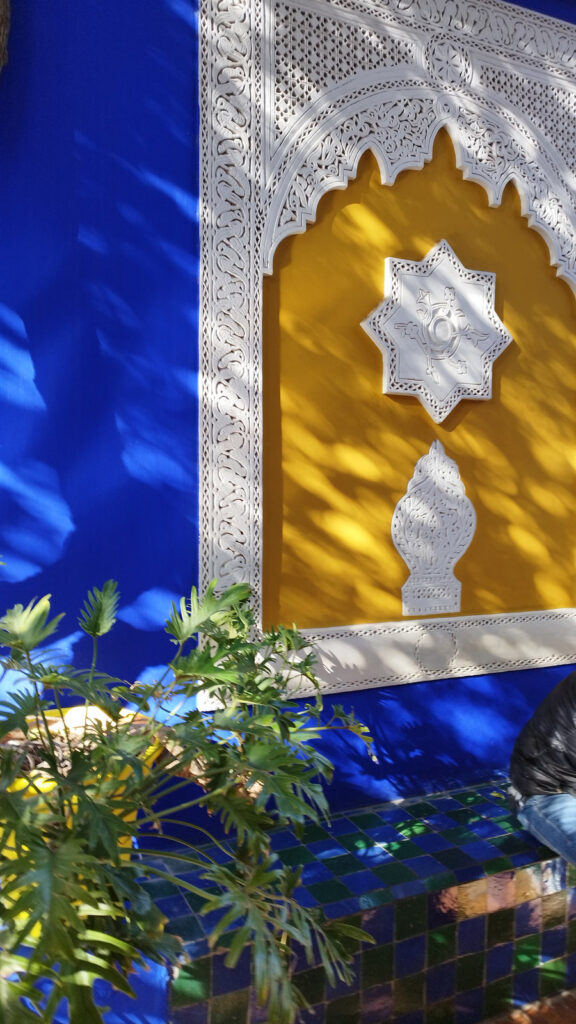
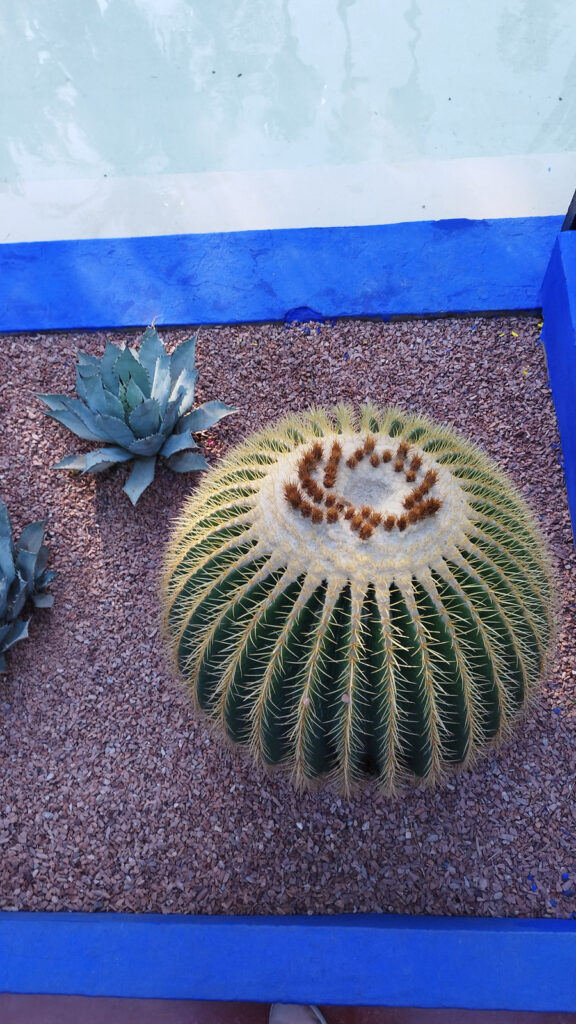
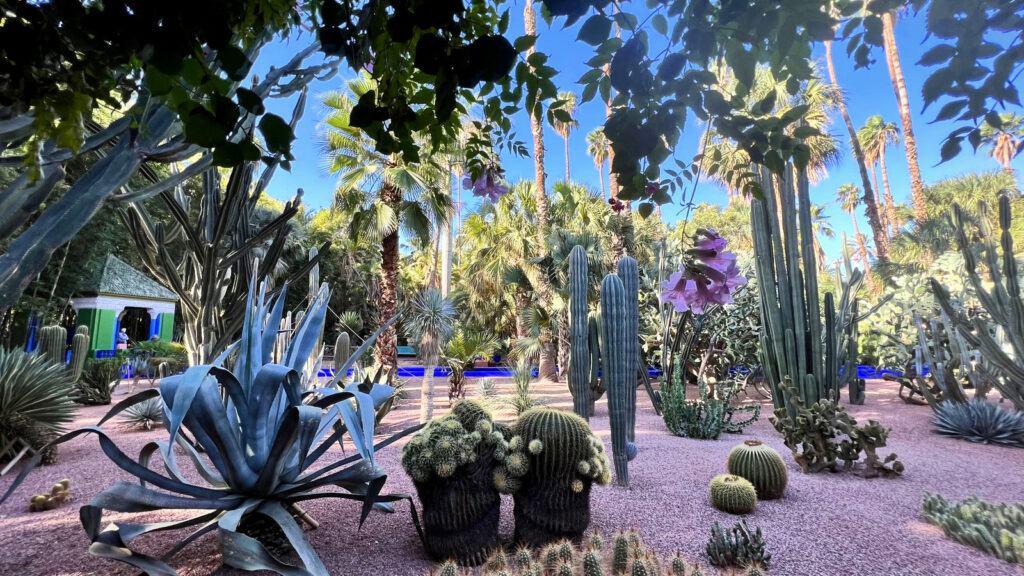
Marrakesh has inspired artists for decades. The Jardin Majorelle was created by the painter Jacques Majorelle and later saved by Yves Saint Laurent and Pierre Bergé. Saint Laurent is said to have remarked that Marrakesh taught him colour. Very close to the old town, Le Jardin Secret, a restored palace garden, invites you to catch your breath.
The contemporary scene is worth a visit too: the Moroccan-British artist Hassan Hajjaj, often called the “Andy Warhol of Marrakesh”, designs his own spaces and cafés in the city. And in small workshops you can see crafts such as made-to-measure leather shoes up close.
Our trip to Marrakesh was full of language, culture and encounters – from historic palaces to modern art projects.
Come with us to Morocco
Experience Marrakesh on our next study trip – with language practice on the ground and guidance in German.
To the Morocco tripAll study trips